
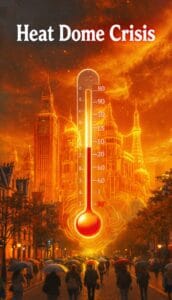
 The Europe Heatwave 2026 has officially begun, with the UK recording unprecedented 35.1°C temperatures as a massive heat dome traps suffocating hot air across the continent. Forget regular summer weather—Europe has skipped straight to August, breaking century-old records in a matter of hours.
This week, London clocked 35.1°C, making it the hottest spring temperature the country has ever recorded. The previous 100-year record was smashed twice within 48 hours, while France wasn’t far behind, recording a staggering 36°C.
Meteorologists warn that this extreme climate event is just the beginning. For the 20,000+ people in southeast England left without running water, and families across Europe sweating through sleepless “tropical nights,” this crisis is already hitting home.
Why Europe Heatwave 2026 is Breaking All Records
This isn’t your normal summer temperature spike. Experts say the Europe Heatwave 2026 could last for weeks due to three critical, unprecedented factors:
1. Century-Old Weather Records Smashed
Weather records dating back to 1922 fell in just two days. This is not gradual environmental warming—this is the European climate hitting fast-forward.
2. Extreme High-Pressure Heat Dome Effect
Spring heatwaves are usually rare because the soil remains moist from winter. However, this high-pressure lid trapping hot air is drying everything out before summer even officially begins.
3. Severe Infrastructure & Collateral Damage
UK hospitals have reported a massive spike in heatstroke cases, rail tracks are buckling under the intense heat, and multiple drownings have occurred across France and the UK as people jump into unsafe open waters to cool off.
The Hidden Crisis: Water and Energy Grid Failures
While citizens are melting, household utility bills are about to explode across the continent during this ongoing Europe Heatwave 2026 crisis.
The extreme weather hit right when European energy prices were already up 50% due to global supply issues. In response, Spain, Germany, Italy, Portugal, and Austria are demanding the EU slap a windfall tax on energy companies. For citizens, the translation is simple: expect government assistance checks if market prices go crazy.
Meanwhile, UK households got hit with a double whammy: no water and skyrocketing AC bills. Thousands of residents in Kent and Sussex lost their water supply for days because local reservoirs simply could not keep up with air conditioning, showers, and lawn sprinklers all running simultaneously.
UK and Europe Heatwave Survival Guide: 3 Steps to Stay Safe
Don’t try to be a hero in this extreme weather. Stay safe during Europe Heatwave 2026 by using this 3-step survival plan to protect your health and your wallet:
1. Travel Smart (Check Your eVisa/ETA Status)
The UK officially switched to digital borders recently. No eVisa or ETA means no flight. Airlines are strictly turning people away at airport gates. Double-check your digital travel status before you pack your bags.
2. Stay Alive (Extreme Heat Safety Protocol)
Extreme heat kills more people annually than severe cold. If temperatures cross the 30°C threshold, follow these rules:
Drink plenty of water before you actually feel thirsty.
Avoid direct sun exposure between 11:00 a.m. and 4:00 p.m.
Check in frequently on elderly neighbors.
Never leave children or pets inside locked cars.
3. Save Money on Energy Bills
Setting your AC to 26°C instead of 22°C cuts your electricity bill by nearly 40%. Keep your blinds fully closed on sun-facing windows during the day, and run heavy appliances at night when the overall grid load is low.
What’s Next: Switzerland Votes and the EU Rebuilds
June 14 Population Vote: On June 14, Switzerland is set to vote on a crucial proposal to cap its national population at 10 million. Proponents argue that fewer people will mean less urban heat stress on infrastructure during extreme climate events.
EU Economic Rebuild: EU leaders recently met in Belgium to finalize a comprehensive 5-year economic rebuild plan. The goal is to create “European champions” in the corporate sector that can withstand climate shocks and geopolitical pressure from the US and China.
The Bottom Line
This early climate shock is a stark preview of the near future. Climate scientists warn that 35°C+ springs will become the “new normal” by the year 2035.
The UK just learned the hard way that its aging infrastructure isn’t ready for 2026 weather extremes. Europe is learning that its energy system isn’t prepared to handle climate shocks and geopolitical conflicts at the same time.
The choice is clear: adapt now, or sweat later.